Why Pavement Markings Matter in the Age of Autonomous Vehicles
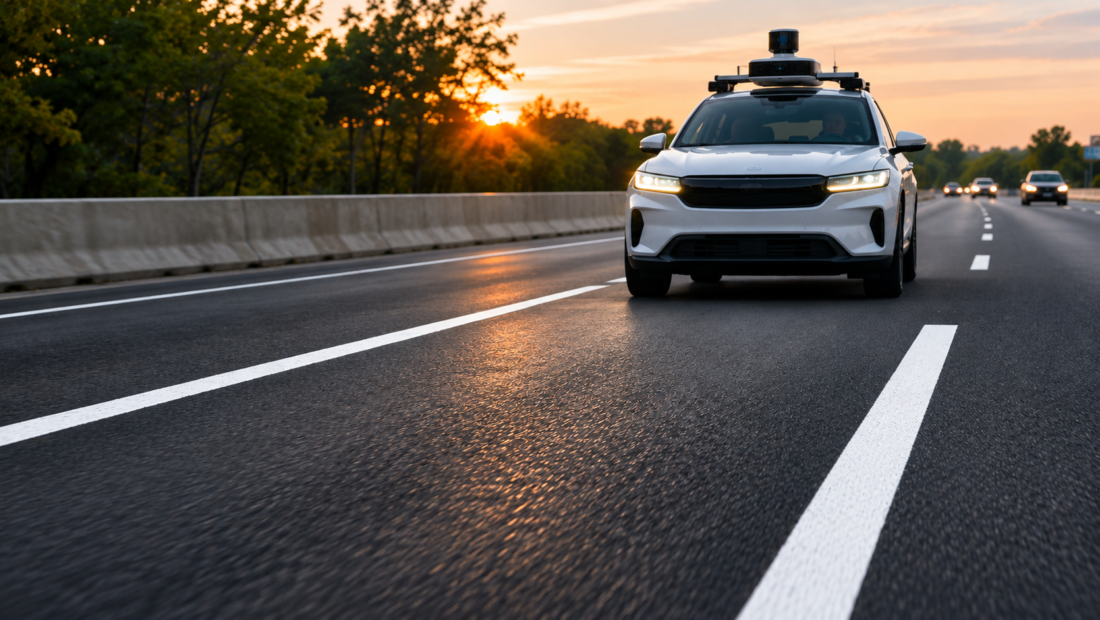
As autonomous vehicles continue moving from testing into real-world use, much of the attention has focused on the technology inside the vehicle.
But what happens beneath those vehicles may be just as important.
Roads are more than asphalt. They are systems that provide vehicles with information about where to travel, where lanes begin and end, and how to navigate safely. For autonomous vehicles, pavement markings are becoming an increasingly important part of that system.
Human drivers generally don't give much thought to lane markings. We see a solid or dashed line and instinctively understand what it means.
Autonomous vehicles have to do something very different.
Cameras, sensors and computer vision systems continuously analyze the roadway to determine the vehicle's position and understand its surroundings. Pavement markings can provide important visual information that helps these systems identify lanes and determine where the vehicle should travel.
That makes the condition of those markings more important than ever.
A faded lane line may be a minor annoyance to a human driver. For an autonomous vehicle relying on camera-based systems, poor visibility can make interpreting the roadway more difficult.
Pavement markings don't exist independently of the road beneath them.
Cracks, potholes, rutting and uneven pavement can all affect the appearance and condition of roadway markings. As pavement deteriorates, markings can become worn, damaged or less visible.
This creates a connection between pavement maintenance and autonomous vehicle readiness.
Keeping roads in good condition isn't only about providing a smoother ride. Well-maintained pavement can also provide a more consistent surface for the markings and other visual cues that autonomous vehicles depend on.
One of the biggest challenges for pavement markings is visibility in difficult conditions.
Rain, snow, standing water, darkness and glare can all make roadway markings harder to see. Autonomous vehicle systems face many of the same challenges as human drivers - but they must rely on cameras and sensors to interpret the environment.
Research is increasingly examining how autonomous vehicle systems detect pavement markings under different conditions, including rain and low visibility.
That raises an important question for the future of roadway construction and maintenance:
How do we design pavement markings that remain easy for both humans and machines to recognize?
Transportation agencies are already beginning to explore that question.
In 2025, the East End Crossing bridge connecting Indiana and Kentucky upgraded its pavement markings with autonomous vehicles in mind. The project incorporated high-contrast markings designed to make lane boundaries easier for camera-based systems to identify, including under low-light and adverse-weather conditions.
Projects like this demonstrate that autonomous vehicle infrastructure doesn't necessarily require completely new roads.
Sometimes, relatively simple improvements to existing infrastructure can make a meaningful difference.
Better markings, improved visibility and more consistent roadway conditions could all help create roads that are easier for automated systems to navigate.
As autonomous vehicles become more common, transportation agencies may place greater emphasis on several characteristics of pavement markings.
Visibility
Markings need to be easy for cameras and sensors to detect. Faded or heavily worn lines can make lane boundaries more difficult to identify.
Contrast
A strong visual difference between the pavement and the marking can help camera-based systems recognize lane lines more easily.
Durability
The longer markings remain visible and intact, the less frequently they need to be replaced or refreshed.
Consistency
Autonomous vehicles rely on predictable information. Consistent lane widths, markings and roadway layouts can make navigation easier for automated systems.
Weather Performance
Markings need to remain visible in rain, darkness and other challenging conditions - not just on a clear, sunny day.
For asphalt contractors and roadway professionals, the growth of autonomous vehicles adds another consideration to pavement projects.
The finished roadway isn't just a surface for vehicles to drive on. It is part of a larger transportation system.
That means pavement quality, markings, signage, traffic signals, sensors and connected infrastructure may increasingly need to work together.
A properly paved road provides the foundation. High-quality pavement markings provide visual guidance. Connected infrastructure can provide additional information.
Together, these elements can help create a roadway that works for both human drivers and automated vehicles.
As autonomous vehicle technology continues to develop, pavement markings may evolve along with it.
We could see greater use of high-performance marking materials, increased emphasis on reflectivity and contrast, and more frequent maintenance on roads where autonomous vehicles are heavily used.
Transportation agencies may also begin considering autonomous vehicle compatibility when designing or resurfacing roads.
The goal won't necessarily be to create roads exclusively for autonomous vehicles. Instead, the focus will likely be on creating infrastructure that works well for everyone - human drivers, pedestrians, cyclists and increasingly automated vehicles.
The Lines on the Road Are More Important Than Ever
For decades, pavement markings have been one of the simplest components of our transportation infrastructure.
But as vehicles become smarter, those lines are taking on a new role.
They aren't just telling drivers where to go. They can also provide machines with critical information about the road.
As autonomous vehicles continue to move from the testing phase into everyday transportation, the quality of our roads - and the markings on them - will play an important role in making that transition possible.
The future of transportation may be autonomous.
But it will still depend on the pavement beneath it.
POSTED: October 30, 2026