Working in the Fall: How Cooler Weather Changes Road Construction
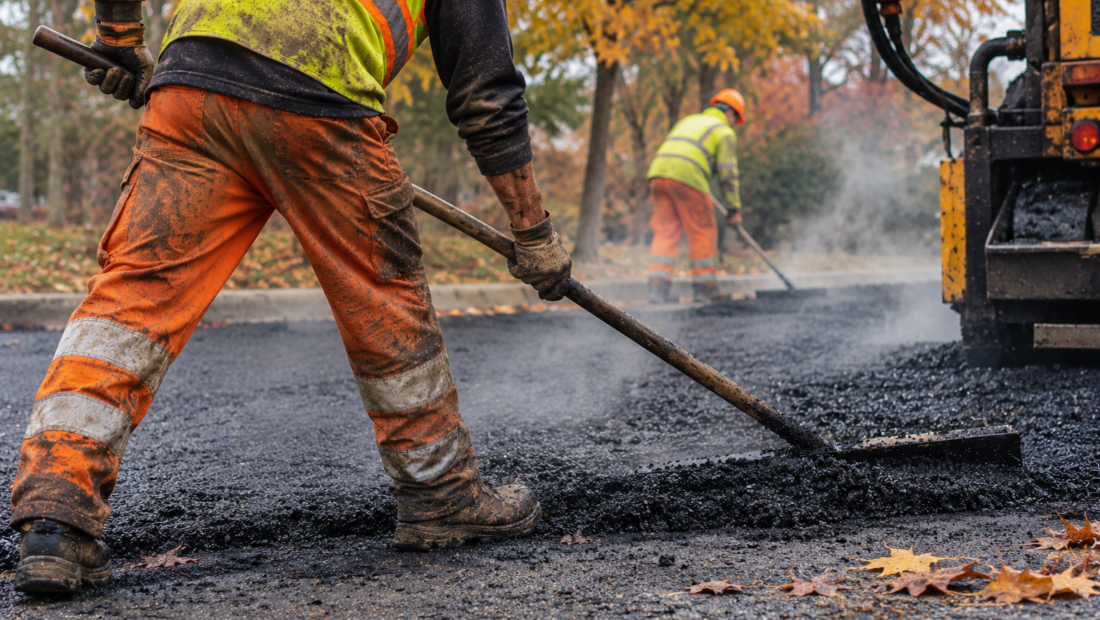
Fall brings cooler temperatures, shorter days, and changing weather conditions. For road construction and paving crews, that means more than swapping out summer gear for a jacket.
As temperatures drop, the conditions on the job site can change quickly - and those changes can affect everything from asphalt placement and compaction to scheduling, equipment and crew safety.
For construction professionals, understanding how the season affects the work is key to keeping projects moving and maintaining quality as winter approaches.
One of the biggest challenges of fall paving is temperature.
Asphalt mixture needs to remain within a workable temperature range long enough for crews to place and properly compact it. As the pavement surface and air temperature drop, the mix loses heat faster, leaving crews less time to complete the compaction process.
That becomes especially important with thinner lifts, which cool more quickly than thicker ones. Asphalt paving specifications account for this by establishing minimum surface temperatures based on the thickness of the pavement being placed.
In other words, fall paving isn't simply a matter of showing up and getting the job done. The crew, plant, trucks, rollers and paving equipment all have to work together efficiently to make the most of the available window.
During the summer, longer days and warmer temperatures provide more flexibility. Fall takes some of that flexibility away.
A project that might have had plenty of time to complete during a summer day can face a much tighter schedule once temperatures start falling and daylight disappears earlier.
That means crews need to pay closer attention to:
Good planning becomes even more important when the weather can change significantly from morning to afternoon.
For paving crews, one of the most important considerations in cooler weather is compaction.
As asphalt cools, the binder becomes stiffer and the mix becomes increasingly difficult to compact. Once the mix falls below its effective compaction range, achieving the required density becomes much more difficult.
Cold temperatures and wind can accelerate that cooling process.
That puts additional pressure on the entire operation. Material needs to arrive on time, placement needs to stay consistent, and rollers need to be ready to work while the mix is still within its effective temperature range.
Fall paving is a good reminder that productivity isn't just about how quickly material gets onto the road. It's about coordinating every part of the operation so the work can be completed correctly.
Fall weather is unpredictable. A morning that starts cool and dry can turn into a rainy afternoon, while a stretch of mild weather can suddenly give way to much colder conditions.
Moisture is another consideration. Asphalt generally should not be placed on a wet surface, and paving operations may be limited by rain and other weather conditions. Current specifications can also include specific temperature, precipitation and seasonal requirements.
For crews working on utility and road projects, keeping an eye on the forecast isn't just about deciding whether everyone needs a sweatshirt. Weather can determine whether a particular operation can proceed at all.
The material isn't the only thing affected by changing temperatures. Fall conditions also change the working environment for the people on site.
Cooler mornings can mean cold hands and reduced dexterity. Shorter days mean less natural light toward the beginning and end of a shift. Rain, wet surfaces and leaves can create additional slip hazards, while changing temperatures can make it harder for workers to stay comfortable throughout the day.
Layering appropriately, maintaining visibility and keeping the work area organized become increasingly important as the season progresses.
And when daylight disappears earlier, crews need to make sure work-zone lighting and visibility are adequate for the conditions.
Fall is also a good time to pay attention to equipment.
Construction equipment works hard all season, and cooler temperatures can expose issues that may not have been noticeable during the summer. Regular inspections, preventative maintenance and making sure equipment is ready for colder conditions can help avoid unnecessary downtime when the schedule is already tight.
For equipment operators, changing ground and weather conditions also mean staying aware of how the machine is performing and how the job site itself is changing.
Reliable equipment matters in every season - but when the weather is working against the schedule, downtime becomes even more costly.
Fall construction comes with its own set of challenges, but the fundamentals remain the same: plan ahead, pay attention to changing conditions, and give crews the time and tools they need to do the job right.
The days may be getting shorter and the temperatures may be dropping, but for the crews out there building and maintaining our roads, the work continues. And doing it right matters in every season.
POSTED: November 20, 2026